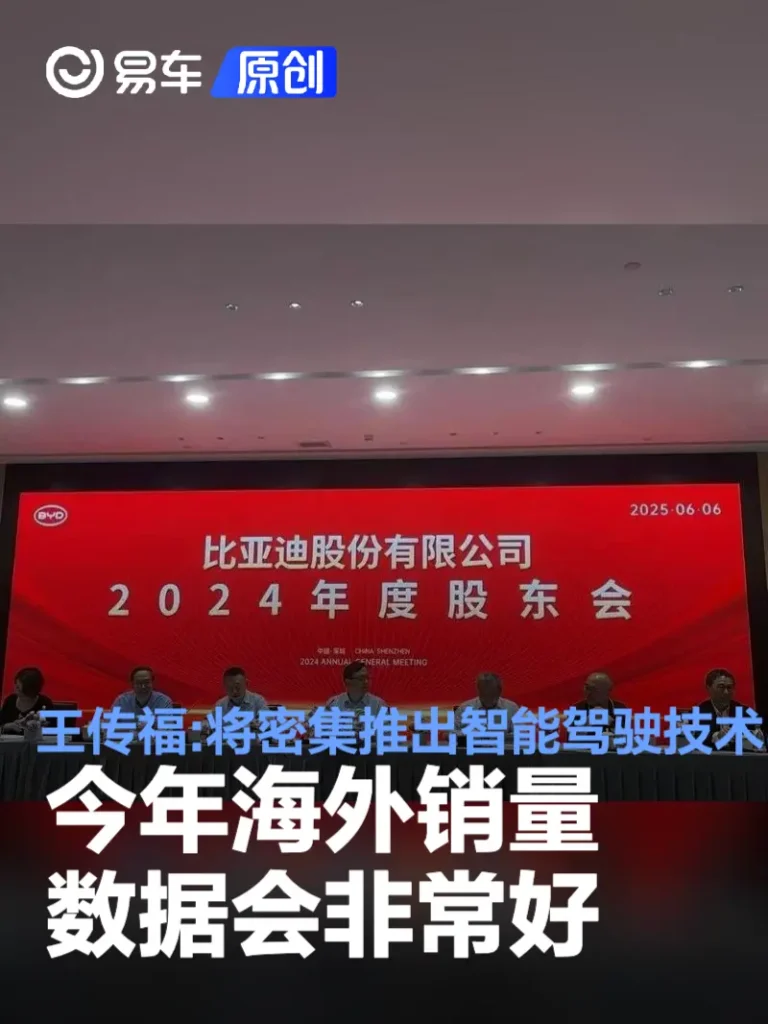
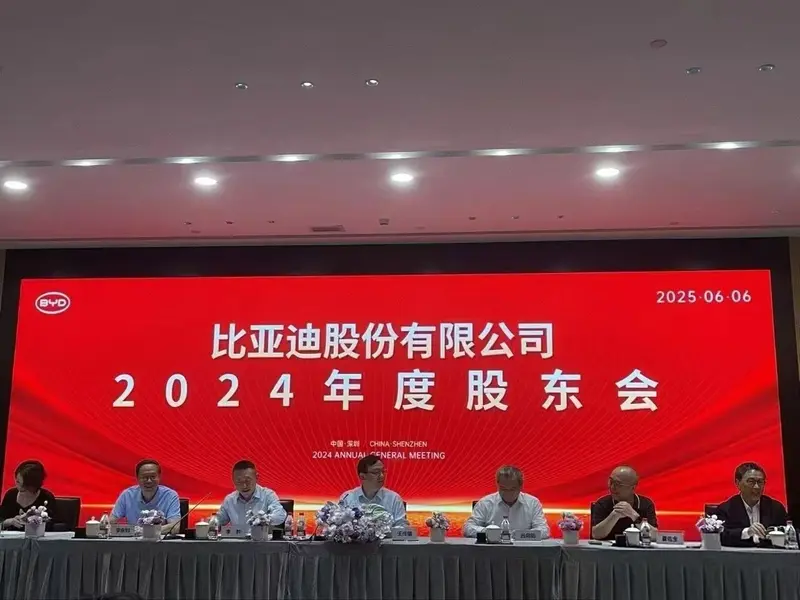
On June 6, BYD held its 2024 Annual Shareholders’ Meeting.
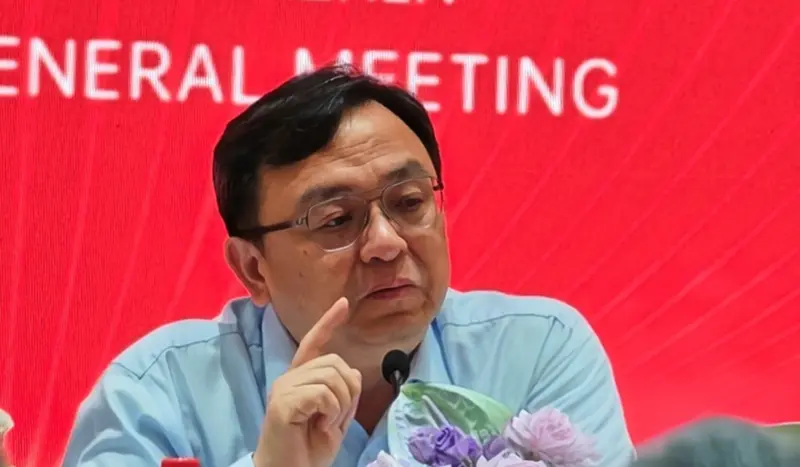
The meeting focused on electrification and intelligent technology routes, overseas market expansion and shareholder concerns. Chairman Wang Chuanfu bluntly stated that “there are still regrets in the first half of electrification” and announced that intelligent driving technology will be intensively launched in the next three years. At the same time, he responded to shareholders’ criticism of product marketing and promised continuous improvement.
Wang Chuanfu revealed at the shareholders’ meeting that BYD sold about 90,000 units overseas in a single month last month and expects the numbers to be very good this year.”Prices in overseas markets are more stable, which helps the company’s profitability more.”He said that future overseas sales are believed to improve month by month, and so far the company’s sales in a number of overseas markets have shown signs of improving month by month.Wang Chuanfu emphasized that overseas is an important strategy for the company, as is high-endization.
Wang Chuanfu admitted at the meeting that there are still some regrets in the first half of electrification, such as the charging speed is slower than refueling, and the low-temperature performance of the battery is still not as good as that of fuel vehicles.
If these technological developments are gradually completed, consumers will have a better experience, which may completely end fuel vehicles.
Regarding the technical route, Wang Chuanfu revealed that BYD will launch a series of intelligent driving technologies in the next three years, and each technology conference will “solve a big problem.”
For example, through algorithm optimization and sensor matching, the stability and response speed of electric vehicles under complex road conditions can be improved.
In the field of intelligent driving, Wang Chuanfu repeatedly emphasized that “safety is the most important factor.”
He took the BYD brand as an example, introducing that BYD’s products have always been subject to extreme safety tests, such as complex curves; in addition, everyone knows that tire blowouts affect safety. Although tire blowouts rarely occur, they may occur and need to be tested continuously; if the driver encounters an obstacle while driving at high speed, whether turning to avoid it can keep the car stable is also related to safety.
He said that safety is the most important factor in intelligent driving, and BYD will put it first, and it is also capable of raising the safety of car driving to a new level with domestic automobile peers.
Safety may sacrifice a little energy density, but as long as safety is always put first, consumers will eventually choose it.
In addition, Wang Chuanfu pointed out that sensors, lidar and other hardware for intelligent driving are just the starting point, and there is huge room for imagination in the future collaboration between algorithms and sensors.
During the meeting, a shareholder criticized BYD in a long article for its shortcomings in product marketing. Wang Chuanfu responded frankly: the company does have shortcomings in marketing due to rapid development.
We can also feel the shareholders’ disappointment with us. We hope that this shareholder can send the article to the company for us to read. We will go back and study it carefully, and make corrections if necessary.
Wang Chuanfu further emphasized that BYD adheres to the development logic of “product strength as the core” rather than relying on short-term traffic or excessive marketing.
Wang Chuanfu said that future capital expenditures will focus on localization construction in overseas markets to seize the “golden period” of new energy vehicles replacing fuel vehicles.
We use cookies to ensure that we give you the best experience on our website. If you continue to use this site we will assume that you are happy with it.