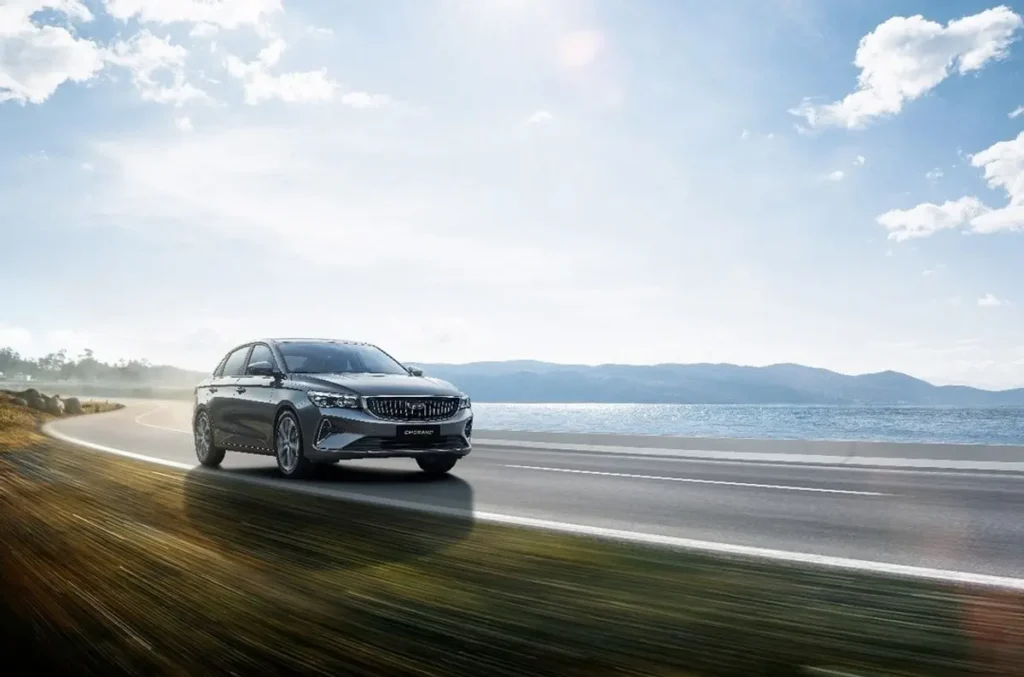
2024, is China’s new energy vehicles to ask the world’s first ten years, since 2015, China’s new energy vehicle production and sales have been ranked first in the world for nine consecutive years, standing on the top of the world’s new energy vehicle wave. In 2023, with the help of new energy vehicles, China’s automobile exports exceeded Japan’s global No. 1 for the first time.Time back to 10 years ago, along with Tesla’s free release of electric car patents, the domestic car-making new forces set off a wave of creation, while at the same time, traditional car companies collectively accelerated the transition to new energy. China’s new energy vehicles have made breakthroughs in technology, gradually improved supporting facilities, the market is more than mature and other factors, to obtain the soaring development, ten years back, new energy vehicles can be said to be “a light boat has crossed the ten thousand heavy mountains”. Car, is a voyage without an end, now, the new energy automobile industry competition pattern has entered the “deep remodeling period”, the depth of the automobile industry chain, intelligent technology iteration and upgrading, China’s automobile sailing to the sea will become the main theme of the future automobile market. Standing at the intersection of the new decade and looking into the distance, some people have collapsed before the dawn, and some people can always step on the drumbeat and take extraordinary steps. At the time of the new energy vehicle decade, we need to be faithful to the facts of the record, but also need to ask questions in the forward movement, thinking in the fast forward.
In recent years, cars going overseas has added a dash of color to China’s auto industry.
In 2024, it is the tenth year for China’s new energy vehicles to become the world’s first. Standing at this node looking back at China’s automobile going overseas, it can be said that the journey is long, 2013-2016, China’s auto exports declined dramatically, 2017-2020 China’s export growth rate gradually stabilized, but always hovering around 1 million units. After a few anonymous times, China’s new energy vehicles in technology breakthroughs, supporting gradually perfect, the market is more mature than the influence of multiple factors, to obtain the wildly rapid development, further driven by the sea ushered in the outbreak.
In 2023, with the help of new energy vehicles, China’s auto exports of 4.91 million units, the first to surpass Japan to ask the world’s first. Standing on the starting point of the world’s first, China’s car enterprises to go overseas to speed up the pace, a number of car companies will go overseas as an important strategy written into the future goals.For example, Changan Automobile plans to reach 700,000 units of overseas sales in 2025; GAC Group challenges to export 500,000 units in 2027.
Entering 2024, China’s auto exports still maintained double-digit year-on-year growth. According to the China Association of Automobile Manufacturers (CAAM), from January to October 2024, automobile exports amounted to 4.855 million units, up 23.8% year-on-year.This also means that the volume of automobile exports in the first 10 months of this year is close to last year’s annual export volume. Specifically, from January to October, passenger cars exported 4.1 million units, up 24% year-on-year; commercial vehicles exported 755,000 units, up 22.5%.
Cui Dongshu, secretary-general of the Association, believes that four factors, namely, heaven’s help, high quality, people’s efforts, and geopolitical changes, have contributed to the promotion of Chinese automobile enterprises’ “going out”. The first is God’s help – China’s automobile industry chain resilience; second is high quality – new energy export contribution increased; third is human efforts – independent brand enterprises are very hard; fourth is geographic change – China’s exports differentiated development.is the geopolitical change – the differentiated development of China’s exports.
At the same time, the challenges of China’s auto industry exports have gradually emerged, tariff risk exists in the background, car companies seeking production capacity to go to sea, the value chain to go to sea in a comprehensive manner and other new modes has become another trend.
China’s auto exports achieve huge breakthroughs in volume and unit price
In recent years, China’s automobile industry chain and supply chain continues to improve, the industrial structure is constantly adjusting and upgrading, and the scale of automobile exports is also expanding day by day. At the same time in the automobile export sales all the way wildly, the automobile export prices gradually higher, showing the characteristics of volume and price; In addition, with China’s automobile industry old and new kinetic energy switch, new energy automobile exports become a dark horse that can not be ignored.
According to the data of Cui Dongshu statistics, China’s auto exports experienced years of million-volume platform period in 2021 began to break through. After the dramatic decline under the world economic downturn in 2013-2016, China’s export growth rate gradually stabilized and improved in 2017-2020, and the annual export volume was maintained at a level of about 1 million units.
Cui Dongshu pointed out, “In 2021-2023, China’s automobile exports realized a huge breakthrough in sales volume and unit price. In 2023, China’s automobiles (including chassis) realized exports of 5.22 million units, with a sustained strong growth rate of 57%. China’s automobile (including chassis) exported 5.28 million units from January to October 2024, a year-on-year growth of 25%.As long as there is a stable market environment internationally, there is still huge space for the development of China’s auto exports in the future.”
According to Yang Jing, Director of China Corporate Research at Fitch Ratings, China’s auto exports have been growing explosively since 2021. China’s more resilient automotive supply chain has enabled Chinese automakers to increase exports and partially fill supply gaps in some overseas markets in the face of volatility in the global automotive supply chain.
According to the data disclosed by the General Administration of Customs, the number of automobiles (including chassis) exported from China in 2023 was 5,221,000 units, a year-on-year increase of 57.4%.From January to October 2024, the number of automobiles (including chassis) exported from China was 5,285,000 units, a year-on-year increase of 24.8%.
According to the data disclosed by the General Administration of Customs, the number of automobiles (including chassis) exported from China in 2023 was 5,221,000 units, a year-on-year increase of 57.4%.From January to October 2024, the number of automobiles (including chassis) exported from China was 5,285,000 units, a year-on-year increase of 24.8%.
Also according to the China Association of Automobile Manufacturers (CAAM), China’s auto export figures surpassed Japan’s for the first time in 2023, reaching 4.91 million units, up 57.9% year-on-year. 4.855 million vehicles were exported in January-October 2024, up 23.8% year-on-year.
Another major feature of China’s automobile exports is that new energy vehicles have become the new growth curve. With a complete, efficient and cost-competitive new-energy vehicle industry chain, new-energy vehicles made in China have begun to be exported to Europe and other electric vehicle-consuming countries.
Cui Dongshu pointed out that with the transformation of China’s domestic new energy vehicle market from subsidy-driven to market-driven, the market competitiveness of China’s new energy vehicles has grown significantly. China’s new energy vehicle exports have realized explosive growth since 2021, and then entered a sustained high growth range.Although disturbed by the EU’s policy of exporting new energy this year, China’s new energy vehicle exports still reached 1.72 million units in January-October 2024, up 15% year-on-year.
According to data from the China Association of Automobile Manufacturers (CAAM), in 2023, 1.203 million new-energy vehicles were exported, up 77.6% year-on-year, a record high.From January to October 2024, 1.058 million new-energy vehicles were exported, up 6.3% year-on-year.
And in the new energy vehicle exports, presents a big obvious characteristic is plug-in hybrid car exports strong. 1-10 months, pure electric car exports 836,000, down 9.2%; plug-in hybrid car exports 222,000, an increase of 2 times year-on-year.
China Merchants Bank pointed out in a research report that, similar to the domestic market, in markets with certain conditions, compared with relying on traditional fuel vehicles or pure electric vehicles as the main product strategy, Chinese car companies use PHEVs as the entry point to the market, not only can effectively avoid head-on competition with international car companies, but also in the first-mover advantage of the Chinese car companies in the PHEV category have greater autonomy in pricing, so independent brands will also be better performance in terms of profits.Therefore, autonomous brands will also have a better performance in terms of profit.
In addition, fuel car exports still occupy a large base. 1-10 months, the traditional fuel car exports 3.798 million units, an increase of 29.7%. New energy export growth rate, independent brands of fuel vehicles in the international market cost-effective advantage, the two together to become an important driver of automobile exports.
Overseas market still has vast space
From the fuel car to the new energy era, Chinese car companies’ “overseas dream” remains unchanged, where exactly is the overseas market for Chinese cars?In the face of increasingly fierce competition in the domestic auto market, overseas gold rush and whether to go through?
From a world perspective, the overall development of the overseas market belongs to the mature stage. According to the data disclosed by Cui Dongshu, the world automobile sales in 2023 reached 89.01 million units, an increase of 13% year-on-year. 74.21 million units of automobiles were sold in the world from January to October 2024, an increase of 2% year-on-year.
Cui Dongshu pointed out that China accounted for about 30% of the world’s automobiles in 2016-2018, dropping to 29% in 2019. the share rebounded to 32% in 2020-2021. 33% and 34% in 2022 and 2023, respectively.
With the current export performance of China’s automobile market, the top 10 countries of China’s total vehicle exports from January to October 2024 are: 957,304 units from Russia, 386,545 units from Mexico, 261,615 units from the UAE, 246,896 units from Belgium, 217,591 units from Brazil, 216,945 units from Saudi Arabia, 166,926 units from the U.K., 149,727 units from Australia,Philippines 138131, Turkey 114517.
Specifically, Russia is currently the largest single market for Chinese auto exports.According to the data disclosed by Cui Dongshu, Russia’s automobile sales reached 990,000 units from January to August this year. Previously, due to the withdrawal of automobile companies from other countries from Russia, Chinese car companies quickly filled the position. Cui Dongshu pointed out that in 2023, Chinese car companies seized the relatively strong demand and insufficient supply characteristics of the domestic market in Russia to achieve a breakthrough of 50% share, and then in 2024 to break through 60% share, realizing the strong growth performance of Chinese car companies.
At present, Chery in Russia broke through the level of monthly sales of more than 30,000 units, January-August, Chery sales in Russia reached 213,300 units; Great Wall Motor January-August in the Russian market sales of 136,600 units; Geely Automobile has achieved 127,500 sales.
At present, Russia’s auto imports of natural person imports, corporate bulk imports as well as corporate parallel imports of three ways, parallel import policy adjustments to benefit China’s car companies official exports, scrap tax policy adjustments to plug the neighboring low tariff gray channel. End-of-life tax, the Russian regulations from the Eurasian Economic Union (EAEU) countries imported cars, its tariff savings must be made in Russia to pay the “end-of-life tax”, blocking the neighboring low tariff gray channel.
The above ranking of the top ten overseas markets, Belgium, the United Kingdom are located in Europe, of which Belgium was once considered by a number of car companies to enter the EU market as an important bridgehead.
The European Union is the old world automobile industry base, according to the data disclosed by Cui Dongshu, the EU car sales in January-August 2024 reached 8.11 million units, up 2% year-on-year. At present, the EU presents the state of China’s own brand share gradually increased, but the share is very small, Europe’s local French, German and other brands excellent performance, in addition, the Japanese and Korean performance is generally stronger.
In recent years, one of the major features of the EU car market has been the strong development of the pure electric vehicle market, with pure electric sales growing from 350,000 units in 2019 to reach 1.96 million units in 2023. It is worth noting that the EU looks at pure electrics differently from plug-in hybrids, and in addition, the EU has a more aggressive electrification strategy.
In the competitive landscape of the EU pure EV market, the performance of China’s own brands has gradually strengthened. in 2020, the share of China’s own brands exceeded 2%, and in 2021-2023, it will be 2.2%, 6.5%, and 9.2%, respectively.
Cui Dongshu pointed out that pure EV brands with outstanding performance in the EU market are mainly Volkswagen, Tesla, Stellantis, BMW and Geely’s Volvo. China’s SAIC, BYD, Xiaopeng, Azera and Great Wall Motors also have some performance, but the overall scale of independent brands is relatively small.
From January to August this year, the top five car companies in the EU electric market were Volkswagen (233,400 units), Tesla (198,000 units), Stellantis (153,100 units), BMW (109,700 units) and Geely Group (106,100 units). Among Chinese automakers, SAIC sold 60,400 units, BYD sold 23,600 units, Xiaopeng 3,256 units, Great Wall Motor 1,376 units, and Azera 1,152 units, leaving a gap with the aforementioned automakers.
In addition, Chinese EV companies have been affected in the short term by the EU’s imposition of countervailing tariffs, and their performance in the EU has declined significantly in recent months, with the share of China’s own brands dropping to 7.7% in January-August 2024.
However, a number of industry insiders and experts told Times Business that high EU tariffs do not necessarily block the pace of enterprises to develop the European market, and in the long run, Chinese electric vehicles can reduce the impact through localized production and so on.
In addition to the EU, Southeast Asia is also an important market for China’s exports of electric vehicles and new energy vehicles.
Among the top 5 countries in China’s total exports of new energy vehicles in January-October 2024, Southeast Asia occupied two seats, namely Thailand (97,379 units), and the Philippines (94,138 units).
Taking Thailand adjacent to China as an example, it is not only a high-potential consumer market in ASEAN and one of the largest automotive producers in Southeast Asia, but also one of the world’s most valuable automotive export markets, with a strong industrial base as well as a world-class manufacturing and supply base.
The Thai government’s policy on electric vehicles in recent years has also become an important boost for Chinese electric vehicle enterprises to encode the Thai market.BYD, GAC EAN, etc. all take this as an advantage to enter the Thai market.
BYD told Time Business that in September 2022, the Thai government began to implement a financial subsidy program for electric vehicles, and also adopted tax relief measures for electric vehicles, such as consumption tax, road tax, import tax and carbon tax, to accelerate the popularization and promotion of electric vehicles. At the same time, Thailand has formulated the “30-30” policy, that is, by 2030, Thailand’s domestic EV electric vehicle replacement rate must be more than 30%, and new energy vehicle production capacity must also reach more than 30%.
According to the official website of Auto Life Thailand, for the whole of last year, sales of pure electric vehicles in the Thai market reached 76,300 units, up 684.4% year-on-year. The BYD Atto 3 (Yuan PLUS) became the top-selling EV model, with sales of 19,000 units last year, accounting for 25% of the share, while eight Chinese-branded EV models, such as Nezha V, BYD Dolphin, and Ola HaoCat, ranked among the top 10 in terms of sales, and Chinese EVs accounted for a total of 80% of the EV market in Thailand.
In addition, a number of Chinese car companies officially announced plans to build factories in Thailand, BYD, GAC EAN’s Thai factory has been put into production.
However, this year, Thailand’s automobile market is facing the challenge of declining sales. The Federation of Thai Industries expects Thailand’s domestic auto sales to fall to 450,000 units from 550,000 units last year, while Thailand’s auto exports will fall to 1.05 million units from 1.15 million units last year. The Federation of Thai Industries expects Thailand’s production of passenger cars and trucks to be 1.5 million units this year, and it has already cut Thailand’s auto production forecast twice this year.
Thailand’s car market is facing a downturn in the situation, Chinese car companies how to radiate through Thailand Southeast Asia market, how to make the Thai market into an electric vehicle export center has become the problem it needs to think about.
Building a new model for going to sea
The automobile market in different countries around the world presents different characteristics, and Chinese automobile enterprises have paved the blueprint for going overseas according to their own situation and local conditions. Chery in 2001 out of the country, exported to the Middle East market; SAIC through the acquisition of the MG brand knocking on the door of the European market; taking into account the Norwegian market, the high penetration rate of purely electric models, Azure will go to sea the first station chosen in Norway, Europe; become the world’s first sales of new energy vehicles BYD successively built factories around the world ……The automobile market in different countries around the world presents different characteristics, and Chinese automobile enterprises have paved the blueprint for going overseas according to their own situation and local conditions. Chery in 2001 out of the country, exported to the Middle East market; SAIC through the acquisition of the MG brand knocking on the door of the European market; taking into account the Norwegian market, the high penetration rate of purely electric models, Azure will go to sea the first station chosen in Norway, Europe; become the world’s first sales of new energy vehicles BYD successively built factories around the world ……
Thanks to the tireless efforts of Chinese car companies, a number of car companies have realized positive growth in their overseas export business.
From January to October this year, Chery became the No. 1 vehicle exporter, with sales of 941,000 units; SAIC followed with sales of 757,000 units; and Changan ranked third, with 467,000 units exported. In terms of growth rate, BYD has the fastest growth rate, exporting 332,000 units from January to October, up 79.6% year-on-year; BAIC exported 218,000 units, up 63.2% year-on-year; and Changan’s export growth rate was also over 60%.
“In the past, China’s automobiles looked at the world, but now the world’s automobiles look at China.” In fact, as China’s auto industry transforms to electrification and intelligence, it is accumulating first-mover advantages such as new energy technologies, and Chinese auto brands are gradually changing from followers to leaders.
At present, the automobile overseas is no longer limited to the whole car overseas, the industry chain’s collective overseas is becoming a trend. From the point of view of the automobile overseas path, from KD assembly to localized production, “technology to the sea”, “ecological to the sea” is the theme of the automobile to the sea.
And from the external environment, tariff risk has become one of the obstacles to the export of China’s new energy vehicle enterprises, Chinese car companies have opted for production capacity to go overseas to cope with the above challenges. At present, a number of Chinese car companies have been in Southeast Asia, Latin America, Europe, the Middle East and other overseas markets planning to build factories or start production.
Among others, BYD expects its plant in Hungary to start production by the end of 2025. Furthermore, in addition to using localized production to avoid the impact of tariffs, Geely plans to leverage its production capacity in Europe through Volvo, LEVC and Lutus Cars, and is willing to establish alliances with local companies.
Zero Run Auto, on the other hand, cooperated with Stellantis Group to set up Zero Run International in a light-asset mode through a reverse joint venture, giving rise to a new mode of going overseas.Zero Run Auto will utilize Stellantis Group’s global channel network, after-sales service system and other commercial resources to accelerate the expansion of Zero Run Auto’s product sales in the world. Zero Run Auto, on the other hand, will provide product technology and play a leading role in technology research and development to provide internationally competitive products.
At the Paris Motor Show in October, Zero Run International revealed that it now has more than 200 dealerships in 13 European countries and is rapidly expanding, aiming to have 500 points of sale in Europe by the end of 2025. It also plans to expand to Asia-Pacific, the Middle East, Africa and South America from the fourth quarter of 2024.”In less than six months, Europe is already full of Zero Run sales outlets.”Zero Run car side previously told Times Finance.
It is easy to see that, in the face of the current barriers to the sea, China’s automobile “go out”, “go up” determination remains unchanged. “Doing globalization must have patience, and must be a win-win situation.”At the Roc AI Technology Day, He Xiaopeng, chairman of Roc Motors, repeatedly emphasized the importance of multi-party win-win in going overseas.
Nezha Auto expressed a similar viewpoint to Times Finance: to promote the upstream and downstream of the industrial chain and the parts and components supporting system to go to sea in collaboration, and to bring China’s leading electric vehicle technology and supply chain to the local market to better cultivate and serve the local market and drive the rapid development of the local industry to achieve mutual benefit and win-win results,The company will bring China’s leading electric vehicle technology, supply chain, and manufacturing capabilities to the local market, better cultivate and serve the local market, and drive the rapid development of the local industry, realizing mutual benefits and win-win results.” Taking Nezha Auto’s Thailand factory as an example, the localization of its local employees is up to 95% or more, which not only enhances the local employment rate and drives local economic growth, but also avoids conflicts with local laws and culture.”
BYD has previously told Times Business that it continues to recruit and train talents in relevant fields in Thailand to face the challenges in cross-cultural coordination and management; and to adapt to the habits and preferences of local consumers to achieve localized operations.
It can be seen that the automobile overseas is no longer only with the “car” or “parts” of a product related to how to realize the exchange of technology, cultural resonance are very critical.
A long way to go, in the face of the vast overseas market, China’s car companies show ambition. Standing at the new starting point of the world’s first vision, China’s automobile sailing out to sea will become the main theme of the future automobile market: more and more automobile ro-ro ships carrying Chinese-made cars and Chinese automobile people to develop the globalization of the vocation, sailing to a broader world stage. From arriving to taking root, it is still necessary for Chinese automobile enterprises to adhere to long-termism and cultivate new markets with time and patience. The road ahead is long, the road ahead is thorny, the road ahead is bright, and with the continuous development and enterprising for Chinese automobile enterprises to make a footnote for the voyage, which must be the right way for Chinese automobiles to get to the other side of the mountain and the sea.
We use cookies to ensure that we give you the best experience on our website. If you continue to use this site we will assume that you are happy with it.