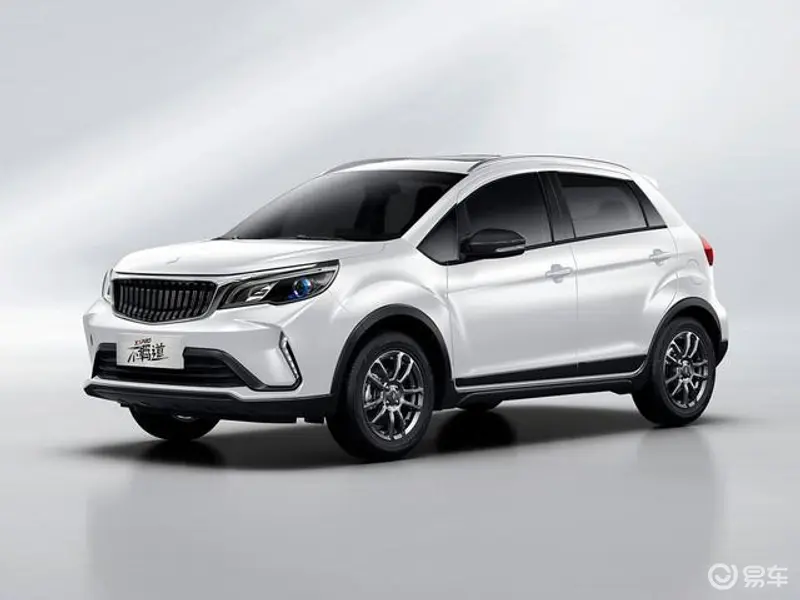
The resilience of Chinese automobiles in the global market is being upgraded from “product export” to “system overseas”. This transformation is not only reflected in sales growth, but also stems from the layout of the whole chain of overseas plant construction, technology export and brand cultivation, laying the foundation for building sustainable global competitiveness.
China Association of Automobile Manufacturers (CAAM) data show that in the first half of this year, China’s automobile exports 3.083 million units, up 10.4% year-on-year. Under the continued influence of multiple international uncertainties, this breakthrough fully reflects the ability of China’s automobile in the global market resistance and competitive toughness.
The relevant person in charge of Guangzhou Automobile Group said that the overseas market has become an important growth point for the company’s sales. GAC in the expansion of exports at the same time, and actively promote the localization of production and ecological sea, take “small batch, fast output, a planning, step-by-step implementation, rolling development” mode, has completed the Middle East, America, Africa, Southeast Asia, Eastern Europe, the layout of the five plates.
The relevant person in charge of BYD also introduced that BYD’s overseas sales in the first half of this year exceeded 470,000 units, more than last year’s annual total, with year-on-year growth of more than 130%. In Italy, Spain, Turkey, Japan, Thailand, Indonesia, Malaysia and other Tesla’s deep-rooted market, BYD to catch up, brand reputation steadily improved.
Wang Peng, an associate researcher at the Beijing Academy of Social Sciences, believes that overseas factory building should be combined with localized operations. Enterprises need to establish a stable supply chain system in the local area, cooperate with high-quality suppliers and introduce domestic core parts suppliers; guarantee the manufacturing quality by training local employees, providing reasonable salaries and dispatching backbones to guide the production; set up a mechanism for policy research and governmental communication to strive for policy support; and formulate a unified branding strategy under the premise of strictly controlling the scope of core technology transfer and combining with local culture to make differentiated adjustments. Differentiation adjustment.
Expansion of overseas markets becomes a “trend”
In the first half of this year, the pace of Chinese automobile “going overseas” obviously accelerated. Guangzhou Automobile Group, BYD, Chang’an Automobile and Xiaopeng Automobile and other mainstream automobile enterprises have invested in the construction of factories in many places around the world, from a single vehicle exports to “localized production + globalization of services” of the new stage. This trend is not only a need for sales expansion, but also an important measure to cope with trade barriers, reduce transportation costs, and stay close to market demand.
Recently, Xiaopeng Automobile officially launched its flagship model Xiaopeng X9 in Indonesia and announced that the right-hand drive version of X9 will be put into production locally in July this year. This is not only its important landing in Southeast Asia, but also a key step in its globalization strategy. As of June this year, Xiaopeng Auto has entered more than 40 countries and regions around the world, and the market map continues to expand.
On May 16, Changan Automobile’s Rayong plant in Thailand was officially put into production and simultaneously witnessed Changan’s cumulative global production of 28.59 million vehicles coming off the production line. Chairman Zhu Huarong said that the company plans to realize global sales of more than 5 million vehicles by 2030, of which the sales of intelligent networked new energy vehicles reached 3 million.
Focusing on the globalization “Hai Nai Bai Chuan” plan, Changan Automobile is accelerating the expansion of five key regional markets other than China, and planning to build a total of 20 overseas vehicle and KD (disassembled and assembled parts) factories, and has already completed and put into production nine KD factories and one vehicle factory. The completion of the Thailand plant means that Changan Automobile’s production network in Southeast Asia has taken shape.
BYD’s overseas expansion is also advancing at a high speed. Data shows that in the first half of this year, BYD’s overseas sales exceeded 470,000 units, a year-on-year increase of 132%; according to the plan, the annual overseas sales in 2025 are expected to exceed 800,000 units. At present, its new energy models have entered the world’s six continents, more than 110 countries and regions.
In terms of production capacity layout, BYD has set up production bases in Thailand, Brazil, Hungary and Uzbekistan. Among them, the new plant in Camasari, Brazil, which was formerly a fuel vehicle production base for Ford in the U.S., will soon be transformed into the production of BYD electric vehicles; the Szeged plant in southern Hungary is expected to go into operation at the end of 2025, and will launch 12 new energy models mainly in the mid-range and plug-in hybrids.
“Last July, our plant in Thailand went into production; in early July this year, we completed the delivery of our 90,000th new energy vehicle in Thailand. At the same time, the first vehicle of the Brazilian passenger car plant officially rolled off the production line, which is our largest vehicle manufacturing base overseas.” BYD relevant person in charge said.
GAC is likewise accelerating the landing of its globalized production and service network. On June 12, GAC Indonesia Smart Plant was completed and put into operation in Jakarta, with production capacity gradually expanding from 20,000 to 50,000 vehicles, radiating to the ASEAN and global markets, and on June 25, GAC International opened its flagship Experience Center and Battery Service Center in Thailand, to promote the localization of the dual-track strategy of “Sales + Energy Service”.
The relevant person in charge of GAC Group said that the company is seizing the window period of transformation of China’s automobile industry from vehicle export to overseas production, and accelerating the “1551” internationalization strategy: since 2023, it has been carrying out KD production in Nigeria, Thailand, Malaysia, Indonesia, etc., and is actively laying out the market in Brazil and Egypt. In July this year, GAC Group officially entered the UK market, taking an important step to expand into Europe. At the upcoming Munich Motor Show, GAC Group will officially open the sale of AION V models in Europe and display new UT cars, and will announce more European market plans in the future.
Globalization has a long way to go
China’s new energy vehicles “out to sea” is entering the deep water. In the past, automobile enterprises mainly exported complete vehicles; nowadays, overseas plant construction, technology export, channel layout and even capital operation are becoming important means for them to compete in the international market. In addition to the wave of overseas investment in the establishment of factories, there are companies choose to accelerate the globalization of the layout through the capital market, Sailix is one of the representatives.
On March 31st of this year, Ceres officially announced the launch of its H-share issuance plan to be listed on the main board of the Hong Kong Stock Exchange. The company admitted that the H-share issuance is not only a financing initiative, but also a key step to deepen the globalization strategy. The proceeds will be used for the research and development of new energy vehicle technology, overseas market expansion and supply chain system optimization, aiming to enhance the overall competitiveness through the international capital platform.
From the disclosure of the prospectus document, the overseas strategic objectives of Sailix are clear and diversified. On the one hand, the company plans to promote the localization of its high-end brands overseas, and develop internationalized models that meet the regulations and consumer preferences of different regions; on the other hand, it will accelerate the docking with the global high-quality industrial resources, and explore a variety of ways, such as self-built factories, reverse joint ventures, strategic cooperation, and mergers and acquisitions, in order to enhance the localized production capacity in different markets. Meanwhile, relying on its technological advantages in range-extending systems, Ceres also hopes to enter the export market for parts and components, and explore more ways to go overseas by taking advantage of the growing global demand for range-extending power.
On the market side, SALIX is not satisfied with entering the overseas market, but emphasizes on deep cultivation and continuous improvement of service capability. The company proposes to build a sales and service network of “one-line leading and multi-point linkage” to enhance the terminal retailing capability by increasing channel density and the reach of high-end users, and forming a refined retailing system from headquarter to region and then to terminal stores. Up to now, its new energy vehicles have entered 62 countries in Europe, America and Africa, and has established a stable business in Norway, Germany, the United Kingdom, Switzerland and other places.
According to public data, the Asian market has accounted for more than 40% of China’s total new energy vehicle exports by 2024. Thanks to policy support and price advantages in Southeast Asia and the Middle East, Chinese brands have accelerated their landing in markets such as Indonesia, Thailand and the United Arab Emirates, and achieved breakthroughs in sales. At the same time, the return of trade protectionism and frequent policy adjustments in various countries have brought challenges to exports. The UK postponed the fuel car ban to 2035, Germany canceled the subsidy for electric car purchase, the US relaxed the tailpipe emission and electric car sales target, and many European and American car companies also began to slow down the electric car production plan. This means that Chinese car companies not only have to deal with the uncertainty of market demand, but also have to adapt to the changing policy environment.
In the face of this situation, industry experts suggest that Chinese car companies need to start from the three aspects of products, partners and services to build a more resilient globalization system.
According to Zhang Xinyuan, head of research at Techfontech Think Tank, the company should prioritize the development of right-hand-drive models and improvement of tropical climate adaptability in light of market differences; in terms of cooperation mode, it should select local head dealer groups and diversify policy risks with joint venture mode; in terms of after-sales service, it can set up a hybrid network of “4S stores + mobile service” and promote door-to-door maintenance in emerging markets. In after-sales, a hybrid network of “4S stores + mobile service” can be established and door-to-door maintenance can be promoted in emerging markets. At the same time, it should also set up a specialized regulatory certification team and start the certification work in the target market 18 months in advance, so as to ensure that the pace of entry is controllable.
Wang Peng also pointed out that in order to make the overseas business sustainable development and have the ability to resist risks, car companies must form a synergy in three aspects: product adaptation, partner selection and after-sales network. The product side should be based on adequate market research to adjust the performance, configuration and design; the cooperation side needs to lock the local partners with resources and credibility, and establish a long-term evaluation mechanism; and the after-sales side needs to encrypt the service network, equipped with professional staff and sufficient parts, to form a rapid response capability. At the regulatory level, it is necessary to continuously track the policy trends of the target market and establish a risk warning and response mechanism.